
Aperture
Play Aperture
Aperture Screenshots





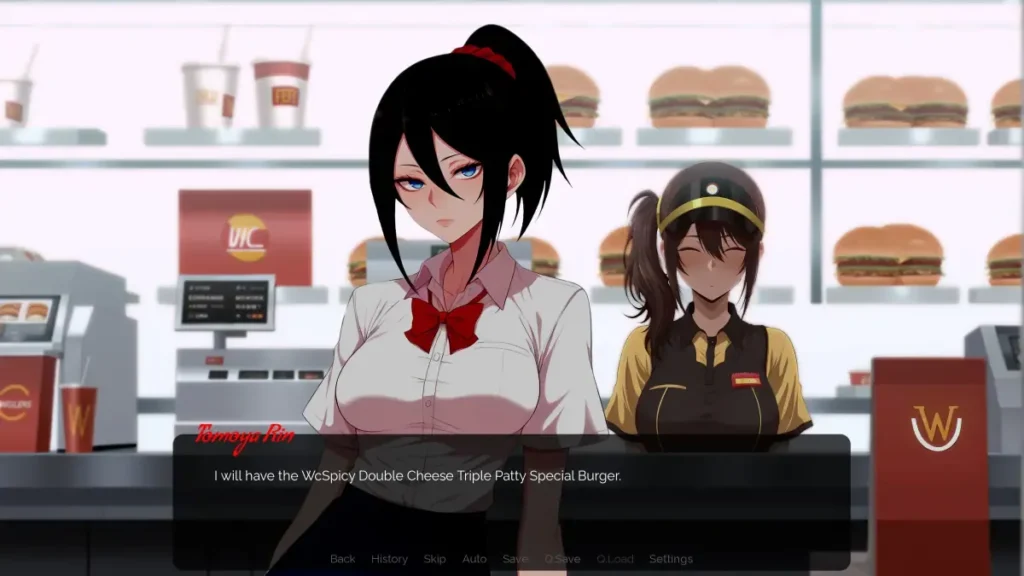






Aperture review
Explore the immersive mechanics, narrative depth, and character-driven experience of this interactive visual novel
Aperture stands out as a unique interactive experience that blends compelling narrative storytelling with engaging gameplay mechanics. Set within the prestigious Hoshino Academy, this visual novel immerses players in a mystery-driven adventure centered around photography, relationships, and personal transformation. Whether you’re exploring the game’s intricate puzzle systems, uncovering branching narrative paths, or discovering the emotional depth of character interactions, Aperture delivers a memorable experience that rewards both exploration and meaningful choices. This comprehensive guide breaks down everything you need to know about the game’s core features, gameplay systems, and what makes it a standout title in interactive entertainment.
Understanding Aperture’s Core Gameplay Mechanics
Alright, let’s talk about the real star of the show: the moment-to-moment play that makes Aperture so utterly captivating. ✨ If you’re coming from other narrative games, you might expect a lot of dialogue choices and branching paths (which Aperture has in spades), but the true heart of your journey lies in its ingenious Aperture gameplay mechanics. This isn’t a passive story; it’s one you physically unlock with your wits.
Think of it this way: the relationships you build and the secrets you uncover are directly gated by your ability to solve problems. The better you understand the world’s rules, the deeper you can delve into its emotional core. It’s a brilliant fusion of brain-teasing puzzles and character-driven storytelling, where every solved chamber feels like a step closer to another character’s trust or a hidden truth. 🧠❤️
So, how does it all work? Let’s break down the foundation that makes this portal creation puzzle game a masterpiece of interactive design.
How Portal Creation and Spatial Puzzles Work
At its simplest, the core tool you’re given is the ability to create two connected portals on specific, flat surfaces. You fire one orange portal and one blue portal, and voilà—you’ve created a instantaneous doorway between two points. Sounds straightforward, right? This is where Aperture’s genius begins. It’s not just a teleporter; it’s a spacetime manipulator, and mastering it is the key to every challenge.
I remember one early puzzle that had me stuck for a good ten minutes. I could see the exit, high up on a wall, but there were no platforms. A single weighted cube sat in a corner. I kept trying to throw it, to build a staircase… nothing worked. Then it hit me: I placed a portal on the floor beneath the cube, and the other on the wall right next to the exit. The cube dropped through the floor portal and exited onto the wall, creating a perfect stepping stone. That “Eureka!” moment, where I redefined the chamber’s very geometry, was pure magic. 🪄
This interactive puzzle solving is all about spatial reasoning. You’re constantly asking:
* Can I see both a valid entry and exit surface?
* What’s the new path if I connect this wall to that ceiling?
* How can I move an object to a place I can’t physically reach?
The puzzles evolve beautifully. Early on, you’re just moving yourself and cubes. Soon, you’re redirecting laser beams, managing floating platforms, and even manipulating the flow of special gels that alter physics. Each new element layers onto the core portal mechanic, demanding fresh observation and creativity. It’s a constant, satisfying learning curve that makes you feel incredibly smart.
Momentum Conservation and Object Interaction Systems
Now, let’s get physical! 🔬 The most thrilling aspect of the Aperture gameplay mechanics isn’t just moving through space—it’s moving through space with style and speed. This is where the momentum conservation mechanics come into play, and they are an absolute joy to master.
The rule is simple: your velocity is maintained when you pass through a portal. Fall from a great height into a floor portal, and you’ll shoot out of a wall portal at the same speed, soaring across the chamber. This principle transforms the game from a thoughtful puzzle-box into a kinetic playground. Some of my favorite moments involved building up speed through a series of falls and portal jumps to launch myself to a distant ledge I could never walk to.
This kinetic system is deeply tied to the object interaction systems. It’s not just about cubes blocking buttons. You can:
* Drop a cube through a portal to give it momentum and trigger a distant switch.
* Redirect energy balls or laser beams through portals to power up machinery.
* Use yourself as a projectile, carefully calculating falls and angles to achieve “fling” maneuvers.
The golden rule of momentum: Speed in equals speed out. A timid step leads to a short hop. A fearless plunge becomes a glorious, chamber-spanning flight.
These object interaction systems force you to think of everything in the room as a potential tool. Is that cube just a weight, or can it be a kinetic battery? Is that pit an obstacle, or is it the source of my launch velocity? This shifts your environmental analysis gameplay from static observation to dynamic, physics-based forecasting.
Environmental Analysis and Problem-Solving Strategies
Before you even fire your first portal, the most crucial step is to just… stop and look. 👀 Aperture is a game of quiet contemplation. There is no combat, no timer. The pressure comes from your own curiosity and the desire to progress the story. Every chamber is a statement, and your first job is to listen to it.
This environmental analysis gameplay means scanning the room for key information:
* The Objective: Where is the exit door or the story trigger?
* The Tools: What objects are present (cubes, turrets, lasers, gels)?
* The Materials: Which surfaces are portal-able (white panels) and which are not (dark metal, concrete)?
* The Hazards & Helpers: Where are acid pits, energy fields, or helpful aerial plates?
My personal strategy, honed over many chambers, follows a simple loop:
1. Observe Thoroughly: Walk the perimeter. Identify every element.
2. Identify the Lock and Key: What’s preventing progress (the lock)? What in the room can solve it (the key)?
3. Plan the Chain: If the key isn’t at the lock, how do I get it there? Portals often are the bridge.
4. Execute and Adapt: Try your solution. If it fails, figure out why the physics didn’t behave as expected—that’s a lesson in itself.
This methodical approach is the soul of the interactive puzzle solving. The game rewards the patient and the perceptive. Sometimes, the solution isn’t about complex portal chains but about noticing a single, overlooked portal-able surface in a shadowy corner.
To tie it all together, here’s a quick reference for how these core systems interact:
| Core Mechanic | Player Action | Primary Purpose in Puzzle Solving |
|---|---|---|
| Portal Creation | Placing linked entry/exit points on valid surfaces | Redefining spatial paths, creating shortcuts, enabling object transfer |
| Momentum Conservation | Moving or falling through portals with velocity | Reaching distant areas, activating switches with kinetic force, solving speed-based challenges |
| Object Interaction | Picking up, placing, and launching cubes & other elements | Activating buttons, blocking hazards, redirecting energy, serving as momentum carriers |
| Environmental Analysis | Observing chamber layout, materials, and object placement | Forming the initial solution plan, identifying constraints and opportunities |
From Beginner to Brainiac: Difficulty and Narrative Integration
You’ve grasped the basics. Now, how does Aperture scale the challenge and, more importantly, weave it into the tale? 🤔
The standard journey through Aperture is beautifully paced, introducing mechanics one at a time before combining them in devilishly clever ways. But for those who truly want to test their mastery of momentum conservation mechanics and object interaction systems, the Aperture game difficulty modes are a fantastic addition.
Beyond a simple “Hard Mode,” these settings often introduce:
* Limited Portal Uses: Can you solve the chamber with only one pair of portals placed?
* Alternative Solutions: New, more complex paths that might involve incredible precision jumps or multi-object chain reactions.
* Time Reflections: (In specific narrative arcs) Puzzles that require considering past and future room states.
Crucially, these aren’t just arbitrary difficulty spikes. Engaging with these harder challenges often reveals hidden story snippets, character insights, or environmental lore that you’d miss otherwise. The game subtly suggests that truly understanding this world—its physical and emotional rules—requires going beyond the obvious solution.
And that’s the final, brilliant link. Every solved puzzle directly advances the narrative. Successfully navigating a particularly treacherous series of chambers might lead a companion character to open up about their past fears. Using clever, non-violent solutions to bypass obstacles could align you with a pacifist character’s worldview, strengthening your bond. Your proficiency with the game’s interactive puzzle solving literally becomes a measure of your protagonist’s growth, competence, and empathy within the story.
In the end, Aperture doesn’t just tell you a story about connection and understanding. It makes you perform those themes through every portal you place, every cube you carry, and every elegant solution you engineer. Your silent role is defined not by a pre-written personality, but by the intelligence, creativity, and persistence you bring to its beautiful, brain-bending world. That is the true magic of its Aperture gameplay mechanics.
Aperture delivers a sophisticated blend of engaging gameplay mechanics and emotionally resonant storytelling that creates a truly immersive interactive experience. From its innovative portal-based puzzle systems to its branching narrative structure, the game rewards both strategic thinking and meaningful engagement with its characters. The depth of player agency, combined with extensive replay value through multiple endings, hidden paths, and post-game features like Director’s Commentary, ensures that each playthrough feels uniquely personal. Whether you’re drawn to the intricate puzzle-solving, the emotional weight of your choices, or the rich character development within Hoshino Academy, Aperture offers something compelling for players seeking a narrative-driven adventure. Dive into this mystery-filled world and discover how your choices shape an unforgettable story.