
Corporate Culture
Play Corporate Culture
Corporate Culture Screenshots












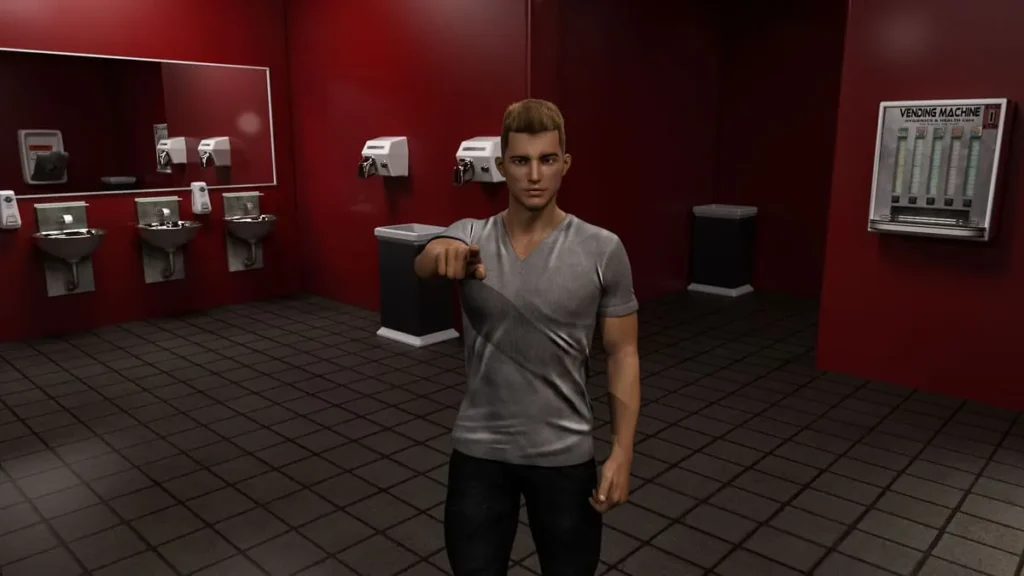









Corporate Culture review
A Deep Dive into the Interactive Office Politics Experience
Corporate Culture stands out as a uniquely immersive interactive experience that blends narrative storytelling with strategic decision-making in a corporate office setting. Unlike traditional games that separate gameplay from story, this title merges both elements into a cohesive experience where every interaction carries weight and consequence. Players navigate complex workplace dynamics, manage relationships with colleagues, and make morally ambiguous choices that shape their career trajectory. Whether you’re interested in understanding the game’s innovative mechanics, exploring its narrative depth, or discovering what makes it compelling for players seeking meaningful interactive experiences, this guide covers everything you need to know about Corporate Culture.
Understanding Corporate Culture Game Mechanics and Core Gameplay
Ever sat at your desk, staring at a spreadsheet, and thought, “My real job isn’t these numbers; it’s navigating the minefield of personalities around me”? 😅 If so, you’ve already grasped the fundamental genius of Corporate Culture. This isn’t a game about completing tasks; it’s a workplace dynamics simulation where your success is measured in alliances forged, rivalries managed, and political capital accrued. So, how does Corporate Culture game work? Let’s pull back the curtain on the office and see what makes this interactive gameplay office politics experience so uniquely compelling.
At its heart, Corporate Culture flips traditional game design on its head. Forget grinding through quest logs or optimizing resource gatherers. Your primary resource is people, and your most valuable skill is social perception. The Corporate Culture game mechanics are built not around what you do, but how and with whom you do it. Every conversation, every shared coffee break, every decision in a meeting is a move in a delicate, ongoing game. The challenge itself becomes the story, and navigating the human maze is the entire, exhilarating point.
How Relationship Management Drives the Game Experience
Forget health bars and mana pools. In Corporate Culture, your vital stats are trust, influence, and reputation. This is, first and foremost, a relationship management game. Every non-player character (NPC) in your virtual office—from the aloof CEO to the gossipy intern—has a dynamic relationship meter with you that is constantly in flux.
I remember my first playthrough, focusing purely on being the “star employee.” I nailed every report, stayed late, and ignored the social chatter. I thought I was winning. Then, during a crucial project bid, I needed support from Mark in Marketing. Our relationship status was “Neutral Professional.” He listened politely, then said, “I’d love to help, but my team’s plate is just so full. Maybe next quarter?” I was shut down. Not because my work was bad, but because I had never invested in him. I hadn’t remembered his kid’s soccer tournament, hadn’t backed his proposal in last week’s meeting, hadn’t built any social capital. The game had perfectly simulated a universal truth: competence alone is not enough.
The ecosystem is fragile and realistic. Helping a stressed colleague with their workload is an investment. They’ll likely remember it and reciprocate later. Throwing them under the bus to make yourself look good incurs a debt—one the game will remember, and they will seek to collect, often when you least expect it. These aren’t just scripted events; they emerge from the core Corporate Culture game mechanics. Manager behavior changes based on whether they see you as a loyal asset or a threat. Allies become available (or unavailable) for collaborative projects based on your standing with them. The office mood itself can shift from collaborative to cutthroat based on collective player and NPC actions.
The Role of Player Choices in Shaping Outcomes
This is where Corporate Culture truly shines. The Corporate Culture decision system is a masterpiece of nuanced design. You are rarely faced with a simple “good vs. evil” choice. Instead, you’re constantly weighing complex trade-offs: a short-term gain against long-term stability, personal ethics versus professional advancement, one ally’s favor versus another’s ire.
Let’s say a rival, Anya, is presenting a flawed proposal. Do you:
* Publicly dismantle it to showcase your expertise and discredit her?
* Privately point out the issues to her, building a potential bridge?
* Say nothing, let it fail, and swoop in later with your own solution?
* Support it publicly, earning her trust but tying yourself to a sinking ship?
There is no universally “correct” answer. The “best” choice depends entirely on your relationships, your long-term goals, and the current office climate. The player choice consequences are profound and persistent. The game has a memory like an elephant. That public takedown might earn you a reputation as ruthless and brilliant, opening doors with certain power players while making others wary. That private help might turn Anya into a staunch defender, or it might make her see you as a patronizing know-it-all.
To break down this intricate system, let’s look at a common decision matrix. Imagine you need resources for your project that a territorial department head, Bob, is refusing to release.
| Choice Option | Immediate Risk/Reward | Long-Term Consequence |
|---|---|---|
| Go Over Their Head | 🟢 High Reward: Get resources fast. 🔴 High Risk: Directly insult Bob, burn a bridge. |
You’re marked as someone who bypasses chain of command. Upper management may see you as “decisive” or “disruptive.” Bob becomes an active enemy. |
| Subtle Power Play | 🟡 Medium Reward: Slow, steady resource gain. 🟡 Medium Risk: Complex to execute. |
Builds a reputation for shrewdness. If discovered, you seem manipulative. Can undermine Bob’s authority without direct confrontation. |
| Public Confrontation | 🔴 High Risk: Creates office drama, puts everyone on alert. 🟡 Unpredictable Reward: Could force Bob’s hand. |
You become a “fighter.” Some colleagues may admire your guts; others will see you as a source of conflict and avoid you. |
| Bide Your Time | 🔴 Low Reward: No immediate progress. 🟢 Low Risk: Avoids direct conflict. |
Seen as patient or passive. Allows you to gather allies or find an alternative solution. Bob remains neutral, for now. |
This matrix isn’t just flavor text; it’s the engine of the interactive gameplay office politics. Every major interaction presents you with a similar web of potential paths, each weaving a different thread into the ongoing narrative of your corporate career.
🎯 Personal Insight: The most brilliant part of this system is that it forces you to role-play. You can’t just min-max stats. You have to decide: “Who is my character in this office? A principled collaborator? A ambitious climber?” Your choices must flow from that identity, making the story deeply personal.
And the player choice consequences don’t just fade. They cascade. Let’s walk through a real scenario.
Example: The Ripple Effect of a Single Choice
In Week 2, your colleague, Leo, is struggling with a tight deadline. You have a choice: stay late to help him, or leave and focus on your own work.
* You choose to help. It costs you an evening, but Leo’s gratitude meter spikes.
* Consequence 1 (Week 3): Leo returns the favor by giving you a crucial client tip he overheard.
* Consequence 2 (Week 5): During a team restructuring, Leo, now a team lead, advocates for you to join his new high-visibility project.
* Consequence 3 (Week 8): Your rival, who ignored Leo’s struggle back in Week 2, finds themselves staffed on a failing project because Leo didn’t support them.
Now, imagine the opposite choice: you don’t help. Leo fails and is reprimanded. He blames you for your lack of teamwork. Months later, when you need a character witness during a dispute with management, Leo is conspicuously silent. The game’s world evolves organically from these accumulated decisions, creating a story that feels authentically yours.
Navigating the Interactive Office Environment
The office in Corporate Culture isn’t just a static backdrop; it’s a living, breathing, and interactive stage. Understanding how to navigate this space is key to mastering the Corporate Culture game mechanics. This goes beyond talking to people. It’s about reading the room, understanding unspoken rules, and identifying the true flows of power.
The environment is packed with interactive elements that serve as tools for your relationship management game. The coffee machine isn’t for caffeine; it’s an intelligence-gathering post and a neutral ground for informal chats. The “All Hands” meeting isn’t just an info dump; it’s a theater where you can observe body language, see who sits next to whom, and gauge reactions to announcements. Sending a calendar invite for a “quick sync” is a power move. Choosing to cc someone’s manager on an email is a political missile.
Progression isn’t marked by a level-up screen, but by tangible shifts in this environment. Early on, you might be invisible. As you build influence, you’ll start getting included in side conversations. Your manager might begin delegating more sensitive tasks. You get access to the “real” meeting that happens after the official meeting. The workplace dynamics simulation is so precise that you can feel the change in the air. The balance between challenge and storytelling here is perfect—every social hurdle you overcome is the plot advancing.
The ultimate goal of Corporate Culture isn’t to reach a final “You Win!” screen. It’s to survive, thrive, and carve out your own version of success within a system that is as frustrating, rewarding, and human as the real thing. By centering its Corporate Culture game mechanics on nuanced relationships and meaningful player choice consequences, it delivers an experience that is less about escapism and more about profound, often hilarious, insight. It turns the daily grind into a strategic, narrative-rich puzzle where every person is a piece, and your humanity is both your greatest weapon and your most vulnerable liability. 🏆
Corporate Culture represents a fresh approach to interactive gaming by prioritizing narrative consequence and relationship dynamics over traditional gameplay loops. The game’s strength lies in its refusal to judge player decisions, instead reflecting the complex outcomes back into the game world where every choice matters. By merging challenge with storytelling, it creates an experience where navigating office politics becomes genuinely engaging rather than tedious. Whether you’re drawn to games with meaningful choices, interested in narrative-driven experiences, or simply curious about how modern games can simulate realistic social ecosystems, Corporate Culture offers a compelling and thought-provoking experience. Dive into the game to discover how your decisions shape your corporate journey and reshape the workplace around you.